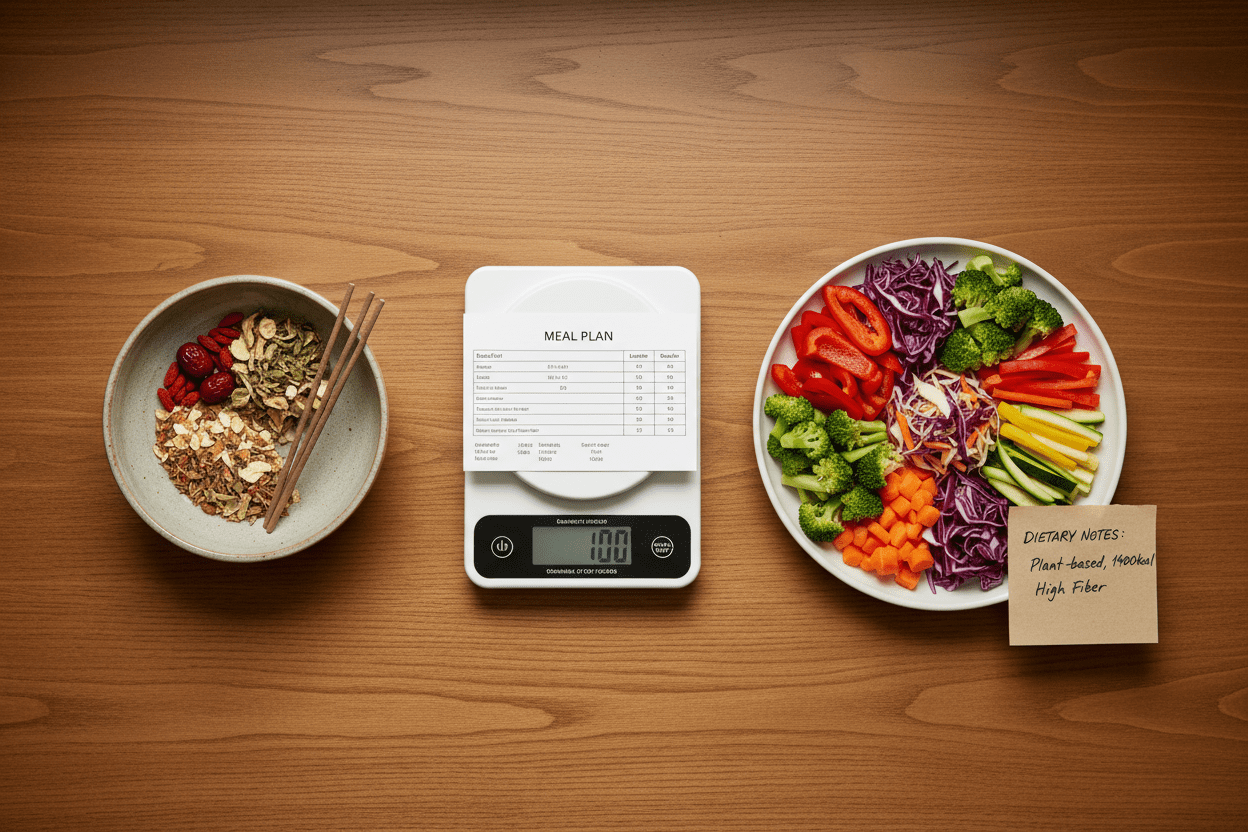
TCM practitioner, dietitian, or nutritionist — who should you see this fall? They are not three versions of the same thing. They start from different places. TCM looks at your whole body pattern. A dietitian works from a specific diagnosis. A nutritionist gives general diet advice. The right choice depends on what your problem actually is.
Who Should You See This Fall? It Depends on Where Your Problem Starts
Fall is when most people recommit to their health. Summer flexibility ends, routines return, and Thanksgiving is around the corner. But when something feels off — bloating, low energy, poor sleep — it is hard to know who to ask. The three titles sound similar. They are not.
📖 In this article:
TCM practitioner: for patterns that keep coming back
A TCM practitioner does not start with a food list. We start with your pattern. How is your digestion? How is your sleep? Do your symptoms get worse in certain seasons, after certain meals, or under stress? These questions build a picture of how your body is functioning as a whole.
The principle behind TCM is simple: the body already knows how to run itself. Our job is to help it return to that natural state. When the body’s own operating system is working properly, symptoms ease and often disappear — not because we suppressed them, but because the body no longer needs to produce them.
Everything on Earth follows the same cycles — day and night, the moon’s phases, the changing seasons. These cycles affect light, temperature, humidity, and the way living things function. The human body is no exception. It is built to follow these rhythms.
TCM training is built on this observation. A practitioner studies how these natural cycles correspond to the body’s organ systems, and how symptoms appear when the body falls out of step with those rhythms. That is why we look at the whole picture — digestion, sleep, energy, mood — instead of treating one symptom at a time. The goal is to help the body return to its natural rhythm, so it can run itself again.
HealthLink BC describes TCM as a system that includes acupuncture, herbal medicine, massage (Tui Na), moxibustion, and diet therapy. You can read their overview here.
A TCM practitioner is a generalist by training. That is not a limitation — it is the design. Because we read symptoms as signals from imbalanced organ systems, we can look at very different complaints and see the same underlying pattern. Bloating in one person and insomnia in another can come from the same root.
Because the body has different ways of falling out of rhythm, TCM uses different tools to bring it back.
Acupuncture adjusts the vitality of the organ systems. When one system is overactive and another is depleted, needles help them find balance again. For a general overview of acupuncture and its safety, see HealthLink BC.
Moxibustion works with temperature and moisture. Some bodies run cold and damp. Others run hot and dry. Moxibustion adds warmth where it is missing, helping the body return to its own stable climate.
Herbal formulas carry their own character. Every herb has a direction, a temperature, and a quality — warming or cooling, drying or moistening, moving or settling. We combine them to match the specific imbalance in your body.
Tui Na (Chinese therapeutic massage) and Gua Sha work on blockages. When the channels that carry vitality through the body become congested, movement slows and symptoms appear — tension, stiffness, pain, a feeling of heaviness. Tui Na uses hands and fingers to release those areas. Gua Sha uses a smooth tool to move stagnation out of the deeper tissue. Both aim at the same thing: clear the pathway, so vitality can circulate freely again.
Different tools. One goal: help your body’s vitality return to balance, so it can run itself again.
There is one more difference worth understanding. Nutrition science looks at food through its components — protein, carbohydrates, vitamins, minerals. That is useful and measurable. TCM looks at food through its nature: is it warming or cooling? Does it move energy up or down? Which organ system does it reach?
Take ginger. Nutritionally, it is a low-calorie root with some vitamin C. In TCM, ginger is warming, it enters the Lung, Spleen, and Stomach, and it is used to dispel cold and settle the stomach. Same food. Two different lenses. One is not better than the other. They are answering different questions.
There is a deeper difference worth understanding. Modern nutrition science categorizes food by its components. In this view, carbohydrates are fuel. When people want to lose weight or control blood sugar, the common advice is to reduce them. But taken too far, this approach removes the very thing the body runs on.
TCM takes a different starting point. The body is built from the energy of food, and whole grains are the foundation of that energy. In classical Chinese dietary theory, grains are not just “carbs.” They are seeds — concentrated vitality that carries the full cycle of the seasons. They nourish the Spleen and Stomach, which TCM considers the root of all energy production.
When grains are removed, the organ systems do not stop working. They keep doing their jobs — digesting, circulating, regulating, repairing — but now they are doing it without enough fuel. Over time, this is what wears them down. The body has to draw on reserves it was never meant to use as a primary source. Symptoms appear not because of the food that was eaten, but because of the fuel that was missing while the work continued.
The problem is not grains. The problem is refined grains, eaten in excess, without balance. The TCM solution is not to eliminate carbohydrates — it is to eat them in their whole form, in the right amount, and adjust based on what your body needs. Removing an entire category of food is not a cure. It is a different kind of imbalance.
Dietitian: for a specific diagnosis
A dietitian works from a specific diagnosis. If your doctor has told you that you have diabetes, kidney disease, a food allergy, or another condition that requires a precise nutrition plan, this is where a dietitian’s work is focused.
They build medical nutrition plans, adjust them as your condition changes, and often work alongside your doctor or specialist.
For more on what a dietitian does in BC, see the College of Complementary Health Professionals of BC.
Nutritionist: for general diet advice
A nutritionist works from your daily habits. If you want to eat more vegetables, read labels more carefully, or build a more balanced plate, this is the kind of guidance a nutritionist provides.
They focus on general diet advice and habit change, rather than clinical nutrition plans for diagnosed conditions.
For more on nutrition guidance in BC, see HealthLink BC.
Three starting points, side by side
| TCM Practitioner | Dietitian | Nutritionist | |
|---|---|---|---|
| Starting point | Your whole pattern and organ balance | A specific diagnosis | Your daily habits |
| What they do | Acupuncture, moxibustion, herbal formulas, food therapy, Tui Na, Gua Sha | Medical nutrition plans for diagnosed conditions | General diet advice and habit change |
| Works from | Patterns that repeat across symptoms | Clinical test results and medical history | Everyday eating and lifestyle routines |
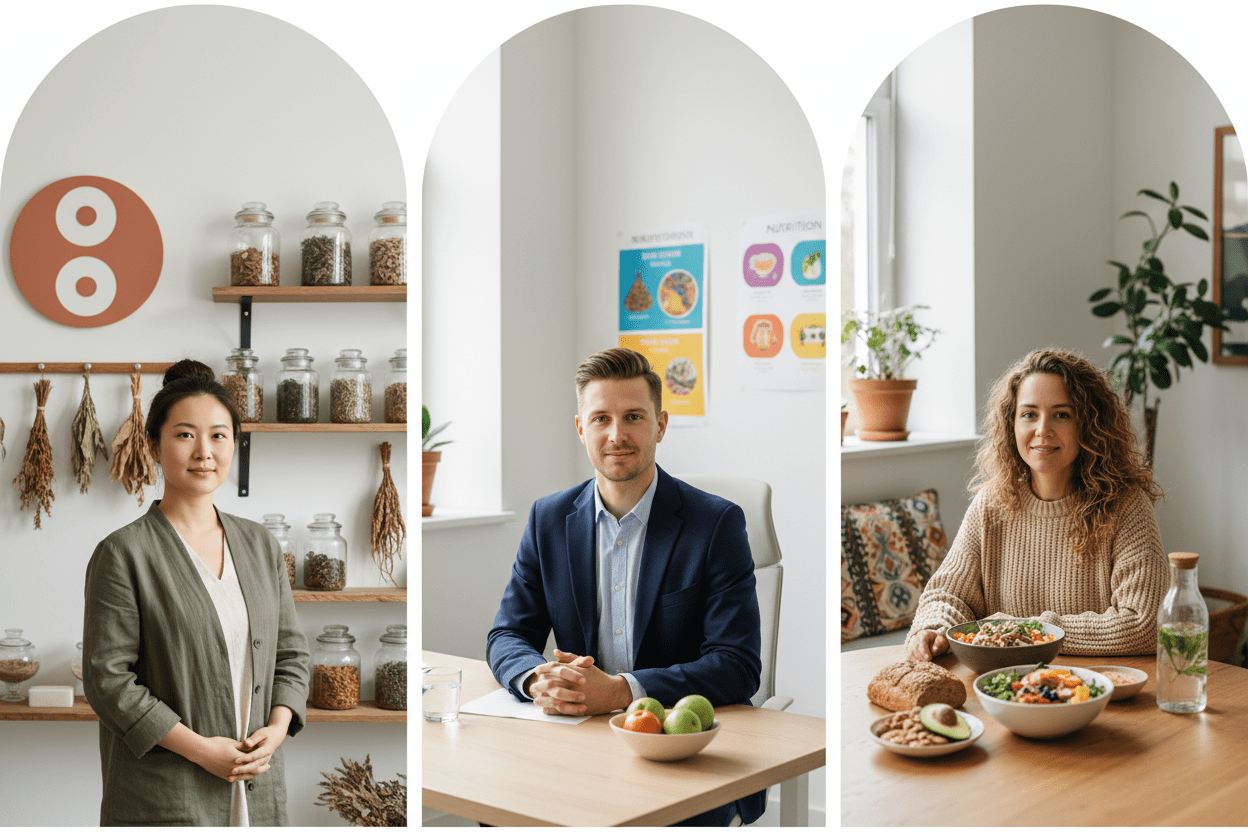
Each of these three professionals starts from a different place. Only you can decide which starting point fits your situation. If you are unsure, the best next step is simply to ask — any of them can tell you whether your problem falls within their scope, or whether someone else is better suited to help.
This information is for educational purposes. Not a substitute for medical advice. If you are unsure about your symptoms, please consult a qualified practitioner.
✨ What Our Clients Say
-
Shirley has helped me a great deal in improving my health. Being a Chinese from Hong Kong, I always trust TCM. Although I knew about moxa since I was a kid, I had never tried moxibustion before, until I met Shirley. I had encountered a medical issue in the past few years that none of my doctors and specialists could explain (or in their words "never heard of"). I had also tried cupping, Chinese massage and acupuncture. However, only after I started to have moxibustion and Shirley's five elements tea and herbal teas, I have experienced a huge improvement. As a matter of fact, many of the herbal teas that Shirley prescribes are actually very traditional recipes from the ancient Chinese medical records since thousands of years ago, which are commonly accessible online or on hard copies. However, to feel the pulse, check the body condition and then apply the right recipe for the treatment is utmost crucial and Shirley is proved to be able to do so. And I was told today that the official name of the clinic of "One More Cup of Tea" is "SLB Traditional Chinese Therapies" and there are a lot of information under that page. I am going to leave the exact same review under that name so nobody should miss it. Thank you Shirley.

Vickie
July 25, 2023Excellent, only 3 and 4 treatments, me and my wife fully recovered.
GARY LIANG
December 2, 2025I've been seeing Shirley to help me with eczema rashes that I have been struggling with for many years and I have already been seeing noticeable improvements from her personalized tea, treatments, and advice. Shirley is very good at locating which areas in the body are needing attention. I highly recommend booking with Shirley!
Jenna McLeod
February 17, 2026 -
I started seeing Shirley in September 2024 when I knew I needed to do more to support my health. Shirley is so knowledgeable and is able to pinpoint things that need attention. Things Western Medicine misses. I am happy to report my blood pressure is down and stabilizing from her treatments and tea. I highly recommend Shirley!
The Primary Advantage
May 10, 2025One More Cup Of Tea and Shirley helped me so much with my skin condition. I would recommend her highly.
Edwin Bussian
August 20, 2022这是一种神奇的疗术,为我消除了身心的伤痛;一次偶然的机会,在纳耐莫认识了五行养生堂的梁女士,刚开始的一个疗程,是以抱着试试看的态度进行了以艾灸为主的理疗,使我消除了长期腰疼的苦痛;在我坚持做完第二个疗程后,两腋下出现了很多就像杂质的体液,同时全身变得有力,更大的是心情不断好了起来;我做完第三个疗程后,全身无比的轻松,让我真正感触到了身体机能的正常是多么开心的事情;本来我想连续做上几个疗程,但是,因为工作出差原因不得不暂停;我为遇到一种神奇的中国传统疗术而欣慰,我更为遇到梁女士的传统疗法而开心;希望中国传统疗法驱除民众的苦痛!愿此神奇的中国传统疗术康复更多的世间广众! Sunray Heating Ltd 总经理:孙小锋 2022年12月15日
Qianqian Yu
December 15, 2022 -
The amazing Shirley Brown goes the extra mile to help you to heal. Her initial assessment and history taking is incredibly thorough. Not only does she assess your medical and surgical history but also goes into indepth assessment of your usual diet .eating .sleeping patterns and your exercise routines . Shirley then can treat and heal you so much more profoundly . My first treatment with Shirley was with Moxinustion . Shirley used this to heal imbalances and to restore my energy system and then could prescribe what was needed to make me heal. I went for my first appointment feeling that I could not be healed or would have to wait months if not years to see a specialist. After seeing Shirley I left feeling lighter stronger and with definitely less pain and actual optimism and knew that I had been really cared for . I have been going to see Shirley for special teas she makes depending on what organ in my body needs the most attention . Shirley is a truly gifted healer and her knowledge of Chinese medicine is profound . Shirley truly excels in her profession.
Sandie Bissessur
February 14, 2026Prior to treatment I had chronic pain from spinal stenosis however, after a couple weeks of taking the tea that was specifically made for me I was in far less pain and discomfort. The results of the treatment were far greater than expected. I highly recommend!!
Justin Docksteader
June 28, 2025Shirley at One More Cup of Tea provides supportive herbal teas and tools to maintain health. She is an important part of my team of health providers.
Steve Bruce
February 14, 2026 -
My opinion is that the teas available at this store are the best natural medicine available in BC. I was amazed at the age of 75 how energized I felt after using Shirley's teas.
Lorne Brown
December 15, 2022Great tea! I feel like a new human today. Thank you very much for my heart still beating.
Shawn Pedersen
March 6, 2022I would highly recommend booking a consultation with Shirley. I met with Shirley in September and on that day she was able to assess my pulse with precision and identify where improvements could be made to support balancing my body. During my initial consultation, Shirley designed a three month treatment plan for me. At each appointment Shirley thoroughly assessed my progress as we worked in partnership to bring my body into balance. Shirley excels at Moxibustion and Tui Na, two therapies that I experienced during my treatment plan and I also followed all of the “homework” that she assigned me. I am very happy with the positive results that I experienced and again I would highly recommended booking a consultation with Shirley.
Glynnis Schwan
December 11, 2024 -
Shirley helped me with my health issues and is a very knowledgable and caring human being. Her services and products are fantastic!
Yori
December 16, 2022Shirley is great and recommending treatments
Greg Binions
December 25, 2022