Post-Acupuncture Symptoms: Understanding Your Body’s Healing Response
Quick Guide: Experiencing unexpected symptoms after acupuncture? Most reactions are normal signs of healing. This guide covers common post-acupuncture symptoms, their meanings, and when to seek advice.
Normal Post-Acupuncture Symptoms: What to Expect
Most post-acupuncture symptoms are positive indications that your body is responding to treatment.
In Traditional Chinese Medicine, these reactions show that qi (vital energy) and blood are moving, blockages are clearing, and your body’s self-healing mechanisms are activating.
Skin Reactions After Acupuncture
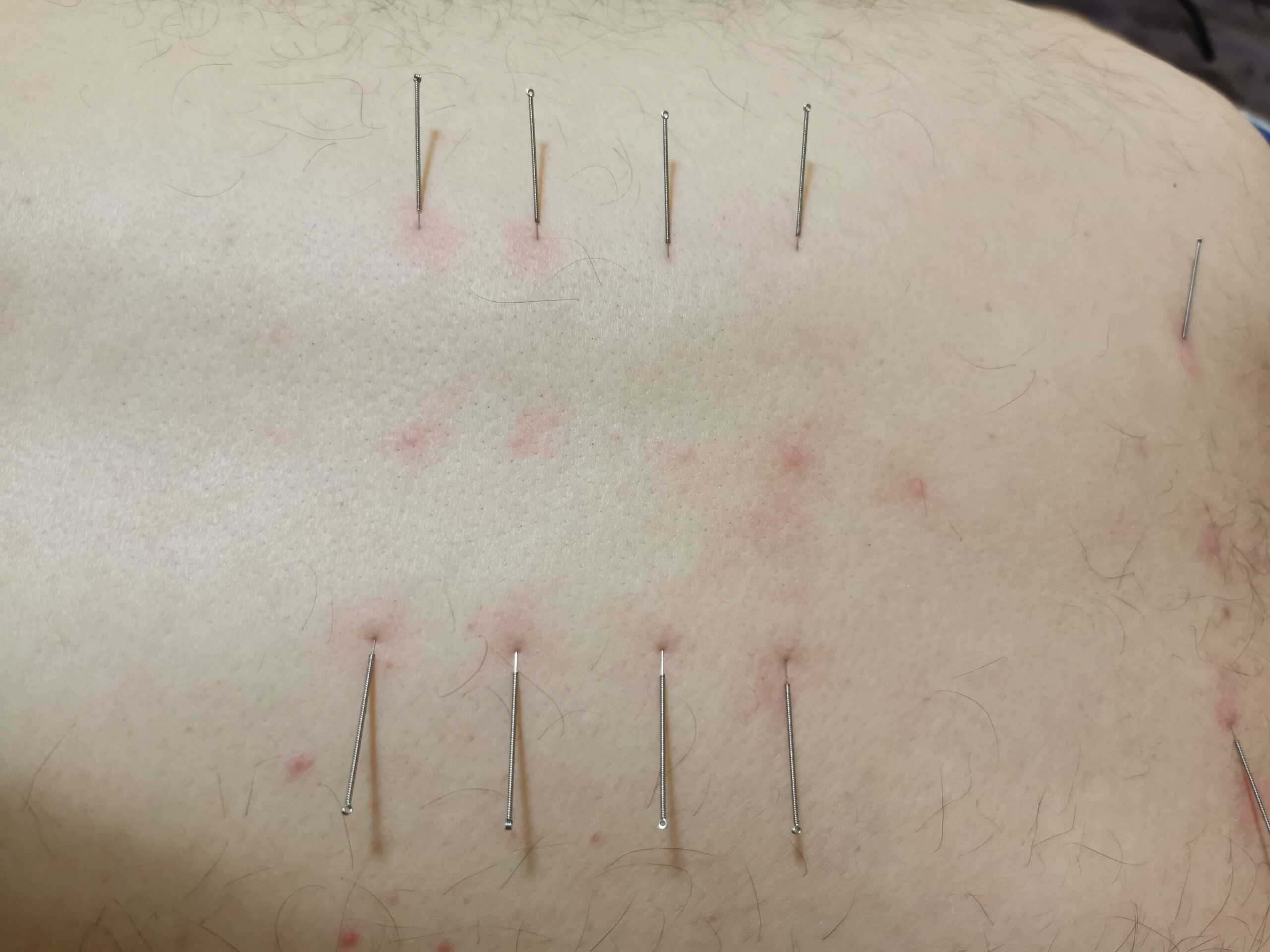
1. Redness Around Needle Sites
A small red spot or halo around the needle insertion point is one of the most common post-acupuncture symptoms. This indicates local qi and blood circulation has been activated.
The redness usually fades within minutes to hours.
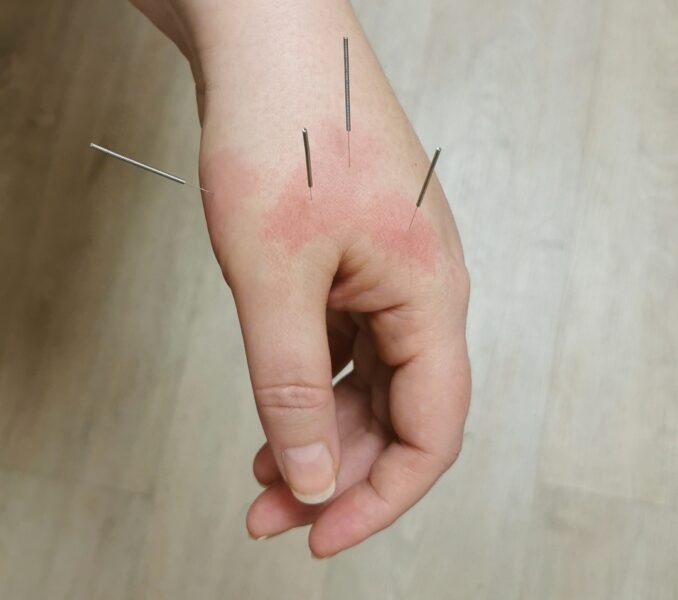
2. Bruising (Petechiae or Ecchymosis)
Minor bruising occurs when a tiny capillary is nicked during insertion. These small purple or red spots are harmless and typically resolve within 3-7 days.
Those taking blood thinners or with sensitive skin may bruise more easily.
3. Small Bumps or “Goosebump” Reactions
Some patients develop a small, raised bump at the needle site-similar to a mosquito bite. This “wei” (in TCM) reaction often indicates a strong local qi response and usually subsides within 24-48 hours.
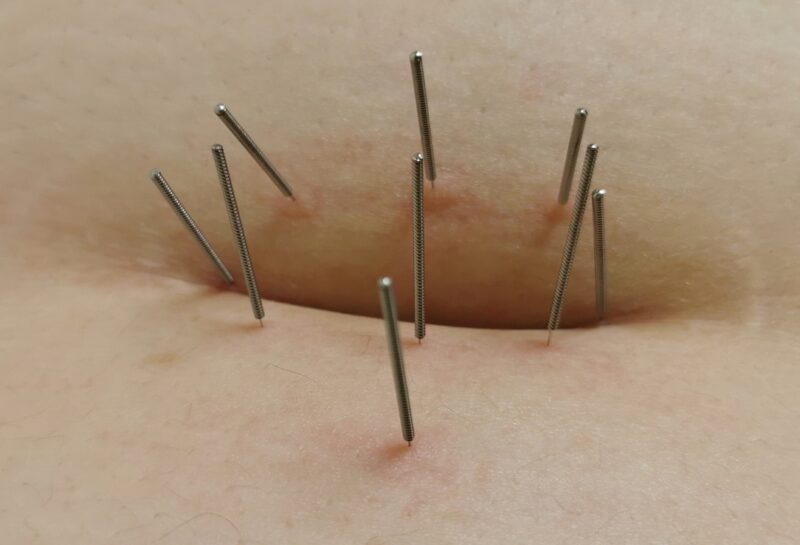
4. Minor Bleeding After Needle Removal
A drop of blood appearing when the needle is withdrawn is normal. Practitioners typically apply gentle pressure with sterile cotton to stop it immediately.
This slight bleeding sometimes indicates the release of stagnant blood in TCM theory.
?? Case Study: Significant Bruising with Positive Outcome
Patient: 38-year-old female with chronic shoulder pain and migraine history.
Treatment: Acupuncture focusing on neck/shoulder points (GB20, GB21, LI15) and liver channel points.
Post-Acupuncture Symptoms: Developed extensive bruising (3-inch diameter) at one shoulder point with slight tenderness. Also experienced minor bleeding at a foot point (LR3) that stopped with pressure.
Outcome: Despite dramatic bruising, her shoulder mobility improved 40% after first session. Bruising completely resolved in 5 days. This indicated strong release of stagnant blood in her chronic pain area.
Clinical Insight: “Some patients with long-standing pain conditions show more vigorous skin reactions. The bruising represented ‘blood stasis’ releasing-a positive sign in her case.”
Energy & Emotional Symptoms
1. Fatigue or Sleepiness
Feeling deeply relaxed, tired, or sleepy after acupuncture is very common. Your nervous system is shifting from “fight-or-flight” to “rest-and-digest” mode.
Many patients report their best sleep after treatment.
2. Increased Energy
Conversely, some feel energized and alert. This often occurs when acupuncture clears blockages, allowing qi to flow more freely.
3. Emotional Release
Tears, laughter, or emotional shifts may occur as acupuncture regulates the liver (associated with emotions in TCM). This is generally therapeutic.
4. Symptom Relief or Temporary Worsening
Some conditions improve immediately; others may briefly worsen as the body adjusts-this “healing crisis” usually precedes improvement.
Pain & Sensitivity Responses
1. De Qi Sensation During Treatment
The “arrival of qi” feeling-tingling, heaviness, warmth, or mild ache-during needle insertion is desirable and indicates effective point stimulation.
2. Soreness After Treatment
Mild muscle soreness similar to post-exercise feelings may occur, especially if tight or knotted areas were treated. This usually resolves within 1-2 days.
3. Distant or Referred Sensations
You might feel warmth, tingling, or movement in areas distant from needle sites as channels communicate-a sign of meridian activation.
What Your Symptoms Reveal About Your Inner Environment
In Traditional Chinese Medicine, every post-acupuncture symptom is a diagnostic clue revealing your body’s internal landscape.
Understanding these signs helps differentiate normal healing responses from patterns needing attention.
Skin Reactions: The Body’s Surface Messenger
1. Redness & Localized Heat
Indicates: Yang Qi Activation or Local Heat
- Quick-fading redness: Normal qi arrival, healthy circulation response
- Persistent redness with warmth: May suggest latent heat in the channel or organ system
- Redness with itching: Wind-Heat pattern (common in allergic or inflammatory conditions)
Clinical Correlation: Patients with underlying heat conditions (hypertension, anxiety, inflammation) often show more pronounced redness.
2. Bruising & Petechiae
Indicates: Blood Stasis or Qi Deficiency
- Small, quick-resolving bruise: Minor capillary disruption, no pathological significance
- Large, dark, persistent bruising: Significant blood stasis (common in chronic pain, menstrual clots, trauma history)
- Easy bruising multiple sites: Possible Qi Deficiency failing to hold blood (seen in fatigue syndromes, prolonged stress)
Channel Significance: Bruising on Liver channel points (LV3, LV14) often correlates with emotional stress or hormonal imbalances.
3. Raised Bumps & Local Swelling
Indicates: Dampness Accumulation or Phlegm
- Small, firm bump: Local damp-phlegm nodulation (common in arthritis, metabolic syndrome)
- Soft, puffy swelling: Qi deficiency with dampness (digestive weakness, fluid retention)
- “Mosquito bite” reaction: Wei-level reaction, often indicates surface pathogen resistance
Bleeding Responses: Blood Level Diagnostics
1. Minimal Bleeding (Drop or Two)
Indicates: Normal Release or Minor Stasis
- Bright red, quick-stop: Normal capillary release
- Dark, thick blood: Old blood stasis releasing (positive sign in trauma recovery)
- No bleeding despite deep insertion: Possible blood deficiency or cold pattern
2. Significant Bleeding or Oozing
Indicates: Heat in Blood or Severe Stasis
When points like SP10 (Xuehai) or LV3 (Taichong) bleed easily:
. May indicate blood heat pattern (skin conditions, excessive bleeding in menstruation)
. Or significant blood stasis requiring herbal support alongside acupuncture
Energy & Emotional Responses: Qi and Shen Level
1. Fatigue vs. Energy Increase
Deep fatigue after treatment indicates:
. Yin or Blood deficiency – body using energy for repair
. Parasympathetic activation – nervous system shifting from chronic stress state
Energy increase indicates:
. Qi blockage cleared – improved circulation
. Yang deficiency improving – warming effect of treatment
2. Emotional Releases
Crying without sadness: Lung/Liver interaction – grief or frustration releasing
Sudden laughter: Heart Shen regulation – joy returning
Irritability after treatment: Liver Qi ascending during adjustment phase
Pain Responses: Channel and Organ Communication
1. De Qi Sensations
Tingling/electrical: Nerve response + qi movement
Heaviness: Dampness being mobilized
Warmth spreading: Yang qi activating, cold dispersing
Aching: Qi arriving at blocked area (positive in chronic conditions)
2. Distant or Referred Pain
Pain appearing far from needle site indicates:
. Channel communication – meridian pathway activation
. Organ referral – internal imbalance manifesting along associated channel
. Healing crisis – previously suppressed pain surfacing before resolution
?? Symptom Duration Guide: Normal vs. Concerning
| Symptom | Normal Duration | Concerning if… | Indicates Possible |
|---|---|---|---|
| Redness at site | 0-24 hours | >48 hours with warmth | Local heat/infection |
| Bruising | 3-7 days | >10 days, expanding | Blood stasis/coagulation issue |
| Fatigue | 4-24 hours | >2 days debilitating | Qi/Blood deficiency |
| Emotional shifts | 1-3 days | >1 week disturbing function | Shen disturbance needing support |
Key Insight: Your specific combination of post-acupuncture symptoms creates a unique “reaction fingerprint” that informs your practitioner about your constitutional patterns, current imbalances, and healing capacity.
Documenting these responses helps tailor future treatments.
?? Case Study: Emotional Release with Skin Reactions
Patient: 45-year-old female with anxiety, insomnia, and digestive issues.
Treatment: Acupuncture focusing on calming points (HT7, PC6), digestive points (ST36, CV12), and ear points.
Post-Acupuncture Symptoms: Developed small red bumps at HT7 (heart point) that itched mildly. During treatment, experienced sudden emotional release-unexpected tears without sadness. Afterward, felt profound calmness he described as “the quietest my mind has been in years.”
Outcome: Skin reactions subsided in 2 days. Sleep improved dramatically after 3 sessions. The emotional release marked a turning point in his anxiety management.
Clinical Insight: “The combination of skin reactions at heart points with emotional release strongly indicated heart-shen disturbance resolving-a classic TCM pattern of anxiety manifesting physically and emotionally.”
When to Contact Your Acupuncturist
While most post-acupuncture symptoms are normal, contact your practitioner if you experience:
- Severe or increasing pain lasting more than 48 hours
- Large hematoma (bruise larger than 2 inches) or persistent bleeding
- Signs of infection: increasing redness, warmth, pus, or fever
- Dizziness or fainting that doesn’t resolve quickly
- Nerve sensation changes: numbness, tingling, or weakness persisting days after treatment
- Any symptom causing significant concern
?? Professional Resources & Next Steps
For more information about post-acupuncture symptoms:
- Consult Certified Practitioners: Find licensed acupuncturists through NCCAOM or your national regulatory body
- Research Evidence: Read clinical studies at NIH/PubMed using keywords: “acupuncture reactions” or “post-acupuncture side effects”
- Understand TCM Theory: Learn about qi movement and healing crises in classical texts
Related Reading: Learn about Post-Moxibustion Symptoms and Reactions for complete TCM therapy understanding.
????? Personalized Guidance at Our Clinic
If you’re experiencing persistent or concerning post-acupuncture symptoms, our licensed TCM practitioner/acupuncturist are here to help.
Why Consult Our Practitioners?
- Detailed assessment of your unique reaction pattern
- Adjustment of treatment plan based on your response
- Integration with herbal medicine if needed
- Continuity of care with practitioners who know your history
What We Provide
- Follow-up consultations to monitor symptom progression
- Customized point selection to minimize adverse reactions
- Education on self-care between sessions
- Peace of mind through professional interpretation of your symptoms
Book an appointment Today!
Schedule a consultation to discuss your post-treatment reactions and optimize your healing journey.
✨ What Our Clients Say
-
Shirley helped me with my health issues and is a very knowledgable and caring human being. Her services and products are fantastic!

Yori
December 16, 2022I started seeing Shirley in September 2024 when I knew I needed to do more to support my health. Shirley is so knowledgeable and is able to pinpoint things that need attention. Things Western Medicine misses. I am happy to report my blood pressure is down and stabilizing from her treatments and tea. I highly recommend Shirley!
The Primary Advantage
May 10, 2025这是一种神奇的疗术,为我消除了身心的伤痛;一次偶然的机会,在纳耐莫认识了五行养生堂的梁女士,刚开始的一个疗程,是以抱着试试看的态度进行了以艾灸为主的理疗,使我消除了长期腰疼的苦痛;在我坚持做完第二个疗程后,两腋下出现了很多就像杂质的体液,同时全身变得有力,更大的是心情不断好了起来;我做完第三个疗程后,全身无比的轻松,让我真正感触到了身体机能的正常是多么开心的事情;本来我想连续做上几个疗程,但是,因为工作出差原因不得不暂停;我为遇到一种神奇的中国传统疗术而欣慰,我更为遇到梁女士的传统疗法而开心;希望中国传统疗法驱除民众的苦痛!愿此神奇的中国传统疗术康复更多的世间广众! Sunray Heating Ltd 总经理:孙小锋 2022年12月15日
Qianqian Yu
December 15, 2022 -
I've been seeing Shirley to help me with eczema rashes that I have been struggling with for many years and I have already been seeing noticeable improvements from her personalized tea, treatments, and advice. Shirley is very good at locating which areas in the body are needing attention. I highly recommend booking with Shirley!
Jenna McLeod
February 17, 2026Shirley is great and recommending treatments
Greg Binions
December 25, 2022Excellent, only 3 and 4 treatments, me and my wife fully recovered.
GARY LIANG
December 2, 2025 -
The amazing Shirley Brown goes the extra mile to help you to heal. Her initial assessment and history taking is incredibly thorough. Not only does she assess your medical and surgical history but also goes into indepth assessment of your usual diet .eating .sleeping patterns and your exercise routines . Shirley then can treat and heal you so much more profoundly . My first treatment with Shirley was with Moxinustion . Shirley used this to heal imbalances and to restore my energy system and then could prescribe what was needed to make me heal. I went for my first appointment feeling that I could not be healed or would have to wait months if not years to see a specialist. After seeing Shirley I left feeling lighter stronger and with definitely less pain and actual optimism and knew that I had been really cared for . I have been going to see Shirley for special teas she makes depending on what organ in my body needs the most attention . Shirley is a truly gifted healer and her knowledge of Chinese medicine is profound . Shirley truly excels in her profession.
Sandie Bissessur
February 14, 2026Shirley has helped me a great deal in improving my health. Being a Chinese from Hong Kong, I always trust TCM. Although I knew about moxa since I was a kid, I had never tried moxibustion before, until I met Shirley. I had encountered a medical issue in the past few years that none of my doctors and specialists could explain (or in their words "never heard of"). I had also tried cupping, Chinese massage and acupuncture. However, only after I started to have moxibustion and Shirley's five elements tea and herbal teas, I have experienced a huge improvement. As a matter of fact, many of the herbal teas that Shirley prescribes are actually very traditional recipes from the ancient Chinese medical records since thousands of years ago, which are commonly accessible online or on hard copies. However, to feel the pulse, check the body condition and then apply the right recipe for the treatment is utmost crucial and Shirley is proved to be able to do so. And I was told today that the official name of the clinic of "One More Cup of Tea" is "SLB Traditional Chinese Therapies" and there are a lot of information under that page. I am going to leave the exact same review under that name so nobody should miss it. Thank you Shirley.
Vickie
July 25, 2023Shirley at One More Cup of Tea provides supportive herbal teas and tools to maintain health. She is an important part of my team of health providers.
Steve Bruce
February 14, 2026 -
Great tea! I feel like a new human today. Thank you very much for my heart still beating.
Shawn Pedersen
March 6, 2022My opinion is that the teas available at this store are the best natural medicine available in BC. I was amazed at the age of 75 how energized I felt after using Shirley's teas.
Lorne Brown
December 15, 2022I would highly recommend booking a consultation with Shirley. I met with Shirley in September and on that day she was able to assess my pulse with precision and identify where improvements could be made to support balancing my body. During my initial consultation, Shirley designed a three month treatment plan for me. At each appointment Shirley thoroughly assessed my progress as we worked in partnership to bring my body into balance. Shirley excels at Moxibustion and Tui Na, two therapies that I experienced during my treatment plan and I also followed all of the “homework” that she assigned me. I am very happy with the positive results that I experienced and again I would highly recommended booking a consultation with Shirley.
Glynnis Schwan
December 11, 2024 -
One More Cup Of Tea and Shirley helped me so much with my skin condition. I would recommend her highly.
Edwin Bussian
August 20, 2022Prior to treatment I had chronic pain from spinal stenosis however, after a couple weeks of taking the tea that was specifically made for me I was in far less pain and discomfort. The results of the treatment were far greater than expected. I highly recommend!!
Justin Docksteader
June 28, 2025